Double Top Pattern: What It Is & How Traders Use It

Key Takeaways
A double top pattern is a potential bearish reversal setup that forms after an advance. The first peak marks an initial resistance test, the pullback creates the neckline, and the second peak tests whether buyers can force a higher high.
The M shape alone does not confirm the pattern. Traders usually watch the neckline, because a move below the interim low suggests support between the two peaks has failed rather than simply held.
Invalidation usually comes from a clean break above the peaks or a failed neckline breakdown. In those cases the structure may turn into a range, a continuation of the prior advance, or a different pattern entirely.
Double-top targets are commonly estimated by measuring the distance from the peaks to the neckline and projecting it down from the breakdown area. That projection is a reference area, not a forecast.
Crypto double tops can be noisy, because wicks, 24/7 trading, liquidity gaps, and broader market moves can create false breakdowns or failed resistance tests that look like confirmation.
What is a double top pattern?
After a sustained rally, the hard question is whether price has finally run into a ceiling or is only catching its breath before another push higher. A double top pattern gives traders a way to frame that question by separating the first peak, the pullback, the retest, and the level where the setup either confirms or fails.
A double top pattern is typically read as a bearish reversal chart pattern that forms when price rallies to a high, pulls back to a neckline, retests a similar high, and then attempts to break below the support level between the two peaks. Its outline resembles the letter M, which is why it is often called an M pattern. Traders who identify one are watching for evidence that the uptrend may be ending, rather than continuing.
The pattern is described as a potential reversal because the dominant read is that buyers tried to push price higher a second time and failed to make a meaningful new high. Whether that read proves correct depends on the structure, broader market context, and what price does next. A double top can help a trader organize a market bias, but it is only one tool for reading price structure and is not enough on its own.
The most important idea is that a double top is not simply "price touched the same high twice." Two similar highs are only the setup. Until the neckline breaks, the chart may just be showing resistance. The pattern becomes more meaningful when price breaks the neckline or otherwise shows that buyers could not defend the level between the two peaks.
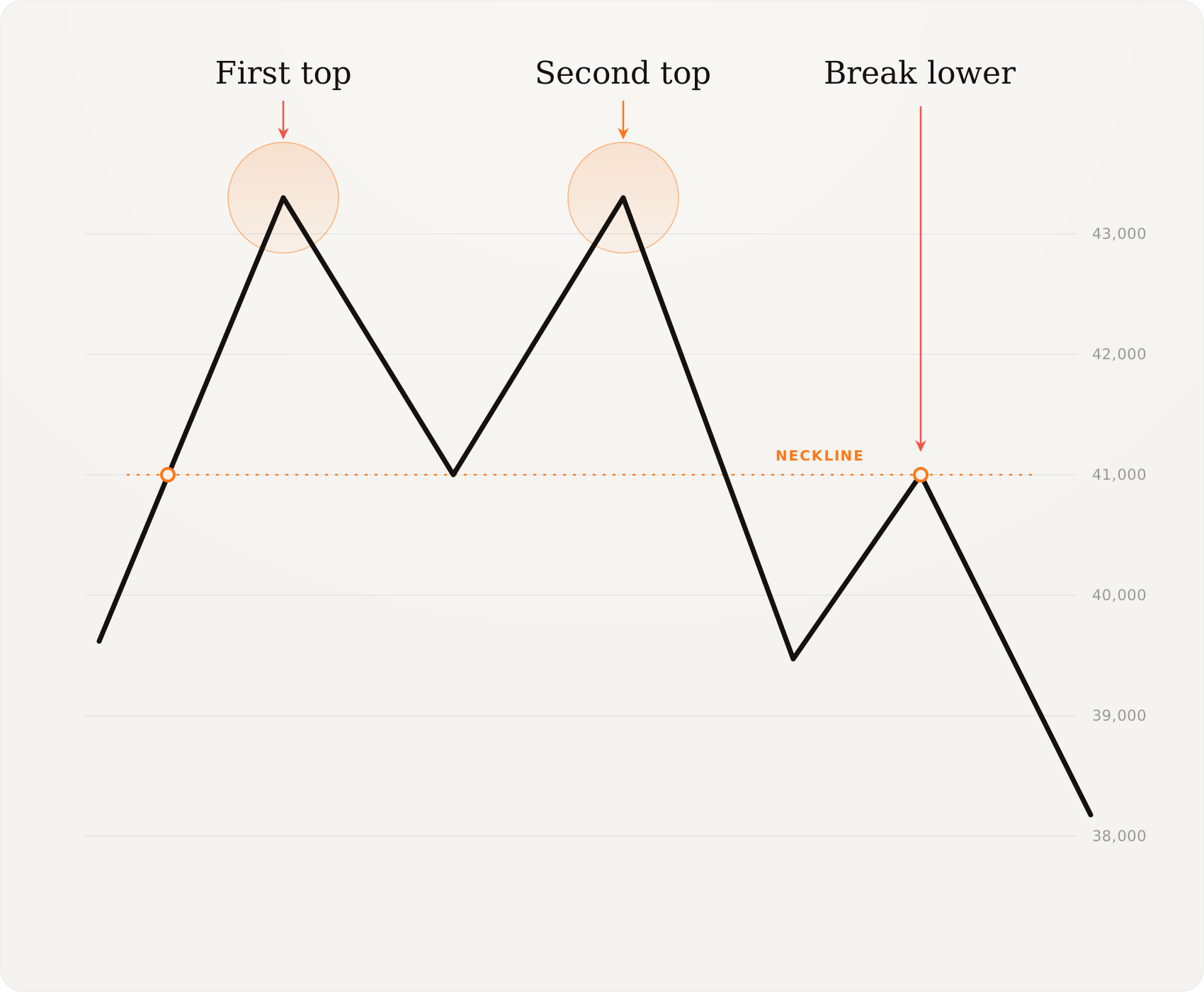
A double top forms when price makes two similar highs, then traders watch whether the neckline holds or breaks lower.
Double top pattern anatomy
A double top has a small set of recognizable components, and naming each one makes the rest of the pattern easier to read.
Prior uptrend: The rally or advance that comes before the pattern. Without a meaningful prior move, there is nothing for the pattern to reverse, and two similar highs in a flat market carry far less significance. The prior uptrend is what gives the M its context.
First peak: The initial area where the advance stalls and buying pressure runs into resistance. This establishes the first resistance test. On its own it says only that the rally paused once; it does not yet suggest a reversal.
Neckline: The pullback low between the two peaks, also called the interim low. The neckline is the level traders commonly watch, because a break below it is the clearest sign the structure may be rolling over rather than pushing higher again.
Second peak: The retest near the first peak. The key characteristic is that buyers try to extend the advance and fail to produce a clean, sustained higher high. The two peaks do not need to match exactly; they form a rough area rather than a precise price. They also need some separation: if the second peak appears almost immediately after the first, the structure may be better read as a single resistance test or noisy chop rather than a developed double top.
Confirmation area: The zone below the neckline where a breakdown would occur. A close back below the interim low is what traders commonly treat as confirmation that support between the peaks has given way.
Invalidation area: The zone above the two peaks. A clean break above that area suggests buyers were not exhausted after all, and the bearish reversal read no longer applies in the same way.
Read together, those parts create the basic test: resistance near the peaks, support at the neckline, and confirmation only if that support breaks.
How a double top forms
The sequence starts with a sustained advance that carries price to a first peak. Buying pressure then runs into resistance, and price pulls back from that high. That pullback creates the interim low that becomes the neckline.
From the neckline, price rallies again toward the first peak. This second advance is the heart of the pattern. The question traders are really asking is whether buyers can push price to a clean new high or whether sellers step in around the prior ceiling. When the second rally stalls near the first peak instead of breaking decisively above it, the M shape starts to take form.
If sellers continue to cap the advance and price turns back down toward the neckline, traders watch for whether price can break that interim low. A move below the neckline is commonly treated as the structure resolving downward. Until that happens, the two peaks are only a candidate pattern, not a confirmed one.
This sequence is sometimes interpreted as buyers failing on their second attempt and sellers regaining control. That framing is useful for understanding why the pattern looks the way it does. But psychology is not directly observable in a chart. What is observable is price behavior, participation, and whether the structure holds long enough to form a recognizable double top.
What confirms a double top?
A double top can look obvious while it is still forming. It is not confirmed just because two similar highs are visible; the important question is how price behaves at the neckline.
The common confirmation cue is a move below the neckline, especially if price closes below that interim low and does not immediately climb back above it. A single wick below the neckline without a close tends to be treated with more skepticism, because wicks can reflect momentary liquidity grabs rather than durable direction. This is especially relevant in crypto markets, where price can briefly break a level during a low-liquidity window and recover within the same session.
Follow-through is what separates a cleaner breakdown from a brief overshoot. A break below the neckline that holds, with continued participation on the downside, is read differently from one that immediately reclaims the level and slips back between the two peaks.
Volume and participation can add context. A common description is that participation is strong into the first peak, lighter on the second peak, and heavier again as price breaks the neckline. When a neckline break comes on thin or fading participation, the confirmation is usually treated as less convincing. That sequence can add weight to the read, though it is not required, and it can be harder to interpret cleanly in 24/7 crypto markets where volume is split across many venues.
That is the thread running through the pattern: the M shape shows where a setup might be forming, while the neckline shows whether it has started to resolve.
What invalidates a double top?
Invalidation works from the other side of the same structure, and a double top can fail in more than one way.
The clearest form of invalidation is a clean break above the two peaks. If price pushes decisively above the first and second peak and holds there, the read that buyers were exhausted no longer applies, and the structure looks more like a continuation of the prior advance than a top.
A failed neckline breakdown is a second form. Price can break below the neckline, draw in traders expecting a reversal, and then climb back above the interim low. When that happens, what looked like confirmation turns into a failed setup, and attention shifts back toward the peaks.
The pattern can also simply stop being a double top. If price keeps oscillating between the peaks and the neckline without resolving in either direction, the structure may be better described as a range than as an M. Broader context can undermine the setup without price touching any specific level: a sharp market-wide rally, a major macro event, or a sudden shift in liquidity can change the environment in which the pattern was forming.
Crypto market structure adds a specific caveat here. A single wick below the neckline does not always settle the read, because thin liquidity and around-the-clock trading can briefly push price through a level without durable follow-through. What matters more is whether the break holds. A lone wick that immediately reverses can leave the neckline effectively intact, while repeated failure to hold below it changes the structure in a way a single spike does not.
How traders estimate a double top target
Once a double top breaks the neckline, traders often use the pattern's own height as a rough guide for where the move might go. This is commonly called the measured move.
The basic approach is to measure the distance from the peaks to the neckline, and then project that distance downward from the neckline breakdown area. If the two peaks sit near $120 and the neckline is at $100, the pattern height is about $20. A full projection from a breakdown below $100 would point toward a reference area near $80. Some traders use the full height; others use only a fraction, depending on timeframe, volatility, and the character of the prior move.
The measured move is best understood as a reference area, not a price destination. Price can stall short of the estimate, run well past it, or fail before reaching it. Treating the projection as a forecast rather than a reference is one of the more common misapplications of the pattern.
Double top vs similar patterns
A few structures can look like a double top, and the distinction matters because the setup and what traders watch for can differ. The table keeps the comparison brief; each of these patterns is its own topic.
Pattern | Shape | Key distinction |
|---|---|---|
Double top | Two similar highs with a neckline between them | Potential bearish reversal after an advance |
Double bottom | Two similar lows with resistance between them | Bullish inverse of the double top |
Triple top | Three resistance tests instead of two | Extended resistance test or longer topping structure |
Head and shoulders | Three peaks with a higher middle peak | More complex reversal structure with left shoulder, head, and right shoulder |
Range | Repeated highs and lows without clean reversal confirmation | Sideways structure, not necessarily an M reversal |
The double bottom is the direct inverse concept: two similar lows after a decline, read as a potential bullish reversal when price reclaims the neckline above them. A triple top is essentially a double top with an extra resistance test, which can mean a more stubborn ceiling or simply a longer fight at the same level. A head and shoulders shares the neckline idea but has three peaks, with the middle one higher than the outer two, so it is a different structure rather than a lookalike to read the same way. A structure that keeps revisiting both its peaks and its neckline without resolving may simply be a range rather than a reversal.
Common mistakes with double tops
Treating two equal highs as confirmation. Two similar highs are the setup, not the signal. Without a neckline break, the structure is only a candidate. Labeling it a confirmed double top on the second peak alone skips the part of the pattern that gives it meaning.
Ignoring the prior trend. A double top needs a meaningful advance to reverse. Two similar highs in a flat or already-falling market carry far less significance, because there is no clear uptrend for the pattern to turn.
Acting on the second peak before the neckline resolves. A turn lower from the second peak is easy to overread while the breakdown is still in question. The pattern is defined by whether price breaks and holds below the interim low, not by a single rejection at the highs.
Treating the measured move as a promise. The projection from the peaks to the neckline is one way to frame a possible move. It is not a floor, a ceiling, or a guarantee. Price can stop short, overshoot, or ignore the estimate entirely.
Ignoring failed breakdowns and upside invalidation. A double top comes with built-in disconfirmation: a clean break above the peaks, or a neckline breakdown that fails and reclaims the level. Traders who track only the bearish case can stay in a reversal read long after the structure has broken out in the opposite direction.
Forcing the label onto ordinary resistance chop. A market can test the same resistance zone more than once without forming a clean double top. If the neckline is unclear, the peaks are part of a broad range, or price keeps rotating without resolving, the cleaner read may be sideways structure rather than a reversal pattern.